
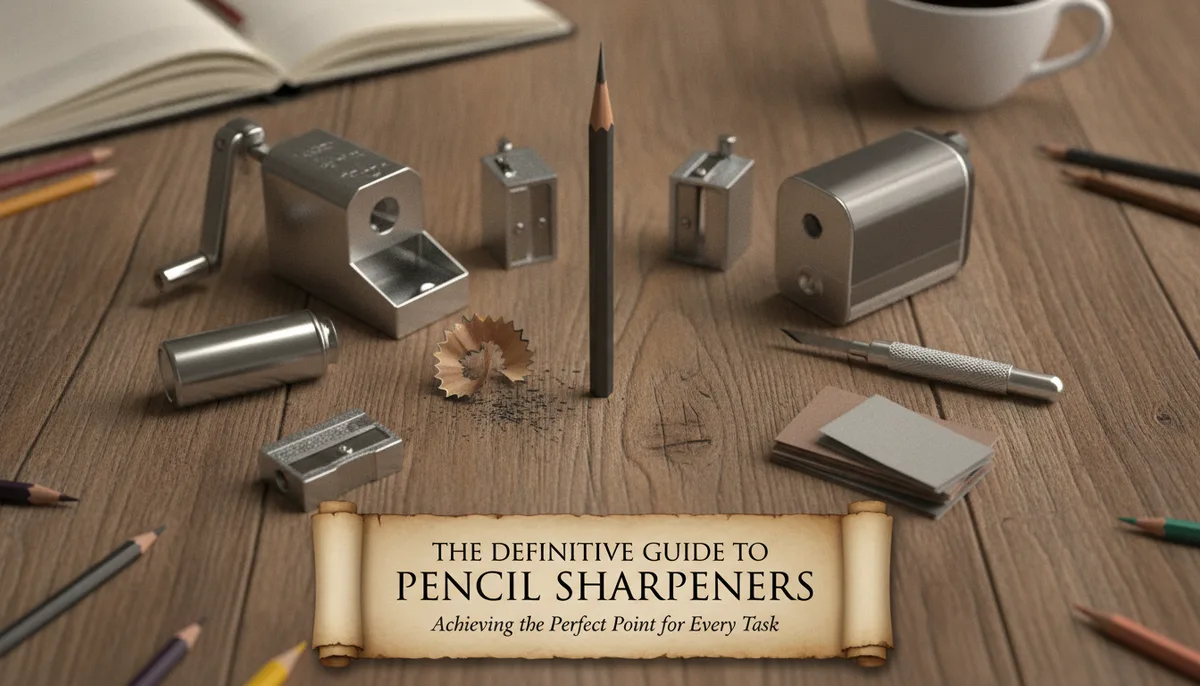
The Definitive Guide to Pencil Sharpeners: Achieving the Perfect Point for Every Task
The Critical Role of the Pencil Sharpener in Your Stationery Kit
For many enthusiasts, the search for the perfect writing experience begins and ends with the pencil itself. We hunt for the rarest graphite grades, the most aromatic cedar barrels, and the most iconic designs. However, even the most prestigious pencil—such as those featured in The DC Pen Show Edition: Elevating Your Writing Kit with New Lamy, Blackwing, and Nahvalur Releases—is only as good as the point it carries.
A high-quality pencil sharpener is not merely a utility; it is a precision instrument. A poor sharpener can "make or break" a wooden pencil in the most literal sense. We have all experienced the frustration of a blade that chews through a cedar barrel, leaves a jagged finish, or creates a point so fragile that it snaps the moment it touches paper. To avoid these pitfalls, understanding the mechanics of sharpening is essential for anyone serious about their analog tools.
Why Quality Matters: Protecting Your Analog Investment
When you invest in premium pencils, you are paying for the integrity of the graphite core and the quality of the wood. A cheap, dull sharpener puts undue stress on both.
Preventing Wood "Chewing"
Lower-end sharpeners often use blades made of inferior steel that dull quickly. Instead of slicing through the wood fibers cleanly, a dull blade tears at them. This results in a "chewed" appearance and can even cause the wood to splinter, which may eventually lead to the pencil barrel cracking.
Preserving the Graphite Core
The core of a pencil is a mixture of graphite and clay. It is surprisingly delicate, especially in softer grades like 4B or 6B. If a sharpener's blade is not perfectly aligned or if the sharpening angle is too aggressive, it can apply lateral pressure to the core. This leads to internal fractures, meaning the lead will fall out in chunks every time you try to sharpen it.
The Gold Standard: KUM Automatic Brake Sharpeners
If you are looking for a reliable, professional-grade tool, the KUM Automatic Brake Sharpener stands as a top choice. It is widely regarded as one of the most dependable sharpeners on the market for several reasons.
The Innovation of the Automatic Brake
The standout feature of this sharpener is the "automatic brake." One of the primary causes of pencil waste is over-sharpening—continuing to twist the pencil long after the point has been established. The KUM mechanism utilizes a physical stop that prevents the blade from shaving off more material once the point is perfectly formed. This ensures your pencils last longer and provides a consistent point every time.
Two-Step Sharpening Process
Many KUM models, particularly the long-point versions, utilize a two-step process. The first hole is designed to sharpen only the wood casing, exposing a long cylinder of graphite. The second hole then shapes that graphite into a needle-sharp point. This separation of tasks allows for a much longer taper than a standard single-hole sharpener can provide.
Understanding Point Geometry: Long Taper vs. Short Taper
Not all points are created equal. The angle at which a sharpener cuts the pencil determines the "taper," and the right choice depends entirely on your specific use case.
The Elegance of the Long Point
Artists and writers who prefer a light touch often gravitate toward long-point sharpeners. A long taper exposes more of the graphite, allowing for a variety of line weights and shading techniques without the wood barrel getting in the way. It also means you can write for longer periods before needing to resharpen, as there is more "lead" available to wear down.
The Durability of the Short Point
Conversely, a short-point sharpener creates a steeper angle and a blunter tip. This is often the preferred choice for:
- Colored Pencils: The cores of colored pencils are wax or oil-based and much softer than graphite. A long point would snap almost instantly.
- Field Work: If you are using a pencil for quick notes in a planner, such as those discussed in The 2027 Planner Preview: A Comprehensive Guide to Choosing Your Next Analog System, a short, sturdy point is less likely to break during transit or heavy-handed writing.
Manual vs. Hand-Crank: Which is Right for You?
The format of the sharpener—how it is held and operated—significantly impacts the user experience and the quality of the point.
Portable Manual Sharpeners
These are the most common and are essential for a mobile stationery kit. They are small, often made of brass or magnesium alloy, and rely on the user to rotate the pencil. The key to success with a manual sharpener is to hold the sharpener still and rotate the pencil with a steady, even pressure.
- Pros: Highly portable, inexpensive, allows for tactile feedback.
- Cons: Higher risk of uneven sharpening if the pencil is tilted.
Hand-Crank (Classroom Style) Sharpeners
Mechanical hand-crank sharpeners use a rotary cutter—a cylinder with multiple blades—rather than a single flat blade. As you turn the crank, the rotary cutter orbits the pencil, shaving it down from all sides simultaneously.
- Pros: Produces the most symmetrical points; usually includes a "clamping" mechanism that holds the pencil perfectly centered.
- Cons: Bulky; can be "aggressive" and eat through pencils quickly if not monitored.
Uni KH-20 Hand Crank Pencil Sharpener
Maintenance: Keeping Your Blades Sharp
A common mistake stationery users make is assuming a pencil sharpener lasts forever. In reality, the blade is a consumable part. Even the best high-carbon steel will eventually dull after processing several dozen pencils.
Replacing the Blade
High-end sharpeners, like those from KUM or M+R, feature replaceable blades. Instead of throwing away the entire unit, you can simply unscrew the old blade and install a fresh one. This is both more economical and environmentally friendly. If you notice the wood on your pencil starting to look "fuzzy" or the blade requiring more force to turn, it is time for a replacement.
The "Cleaning" Trick
Sometimes a sharpener isn't dull; it’s just clogged. Wax from colored pencils or graphite dust can build up on the edge of the blade. Sharpening a standard HB graphite pencil can often help "clean" the blade after using waxy colored pencils. For a deeper clean, a small brush or a toothpick can be used to clear the crevice between the blade and the body.
Specialty Tools: Lead Pointers and Multi-Diameter Sharpeners
While the standard 8mm diameter pencil is the norm, the world of stationery offers much more variety.
Lead Pointers for 2mm Leads
If you use lead holders (clutch pencils), a standard sharpener will not work. You need a lead pointer. These are specialized tools that only sharpen the 2mm graphite lead, often using a "tub" design where you spin the entire pencil inside the sharpener.
Large Diameter Sharpeners
Many "jumbo" pencils or carpenter pencils require a larger opening. If you frequently switch between standard and thick pencils, look for a "wedge" sharpener that features two different-sized holes. This versatility ensures you are prepared for any tool in your collection.
Conclusion: Refining Your Writing Experience
Choosing a pencil sharpener is about more than just utility; it is about respecting the tools you use and the work you produce. Whether you are sketching in a studio or jotting down reflections in a high-shading ink like those found in our Inkebara Caramel Review, the precision of your point matters.
By selecting a tool like the KUM Automatic Brake Sharpener and understanding the nuances of taper and blade maintenance, you ensure that every time you put pencil to paper, the experience is smooth, consistent, and satisfying. Don't let a sub-par sharpener stand between you and your best work. Invest in quality, and your pencils will reward you with years of reliable service.