
Why Your Pen is Skipping: Troubleshooting Common Fixes
Disclosure: This post contains affiliate links. If you make a purchase through these links, Daily Pen Craft may earn a small commission at no extra cost to you. We only recommend tools that help you enjoy your writing journey.
If your pen is skipping, the most common cause is dried ink clogging the "feed" or paper fibers trapped between the nib's tines. For fountain pens, a thorough flush with lukewarm water usually solves the issue. For gel or ballpoint pens, a gentle scribble on a rubber surface or a quick dip in warm water can often jumpstart the flow.
Skipping isn't a sign that your pen is broken; it’s usually just a sign that it needs a little "self-care." Whether it’s a vintage heirloom or a reliable daily driver, most flow issues can be fixed at home with a few minutes of patience and the right approach.
Who This Guide Is For
This guide is written for the writer who feels a pang of frustration when their thoughts are interrupted by a dry line. Whether you are a student using a The Best Fountain Pens for Beginners: A Friendly Start or a professional with a desk full of luxury rollers, these troubleshooting steps are designed to be safe, gentle, and effective.
Troubleshooting Your Pen: At-a-Glance
| Symptom | Likely Cause | Primary Fix |
|---|---|---|
| Starts fine, then thins out | Ink Starvation/Air Lock | Flush the pen or check the converter |
| Skips on certain strokes | Misaligned Nib Tines | Gentle alignment or brass shim cleaning |
| Skips on smooth paper | "Baby's Bottom" (Over-polishing) | Use toothier paper or professional tuning |
| Scratchy skipping | Paper fibers in nib | Clean with brass shims or a soft cloth |
| Intermittent flow | Dried ink in feed | Deep soak in pen flush or water |
Step 1: The "Deep Breath" Clean
Before we look at mechanical issues, we have to rule out the most common culprit: old ink. Even if you use your pen daily, tiny particles of pigment can settle in the narrow channels of the feed.
- The Flush: For fountain pens, use a bulb syringe to push lukewarm water through the section until it runs clear.
- The Soak: If the skipping persists, soak the nib and section overnight in a glass of water with a single drop of dish soap.
- The Gel Pen Trick: For gel pens that skip, try drawing circles on the bottom of a rubber-soled shoe. The friction and grip can sometimes dislodge a stuck ball-bearing.
Step 2: Check Your Paper
Sometimes, it isn't the pen at all—it’s the paper. High-quality paper like Rhodia or Tomoe River is wonderful, but it can sometimes be "too" smooth. If your hand oils get onto the page, the ink might skip because it can't "grip" the fibers.
The Fix: Try writing on a different scrap of paper. If the pen writes perfectly there, you might need to use a "writing mat" or a simple piece of cardstock under your hand to keep skin oils off your stationery.
Step 3: Gentle Nib Maintenance
If you’ve cleaned the pen and changed the paper but it still skips, it might be time for a closer look.
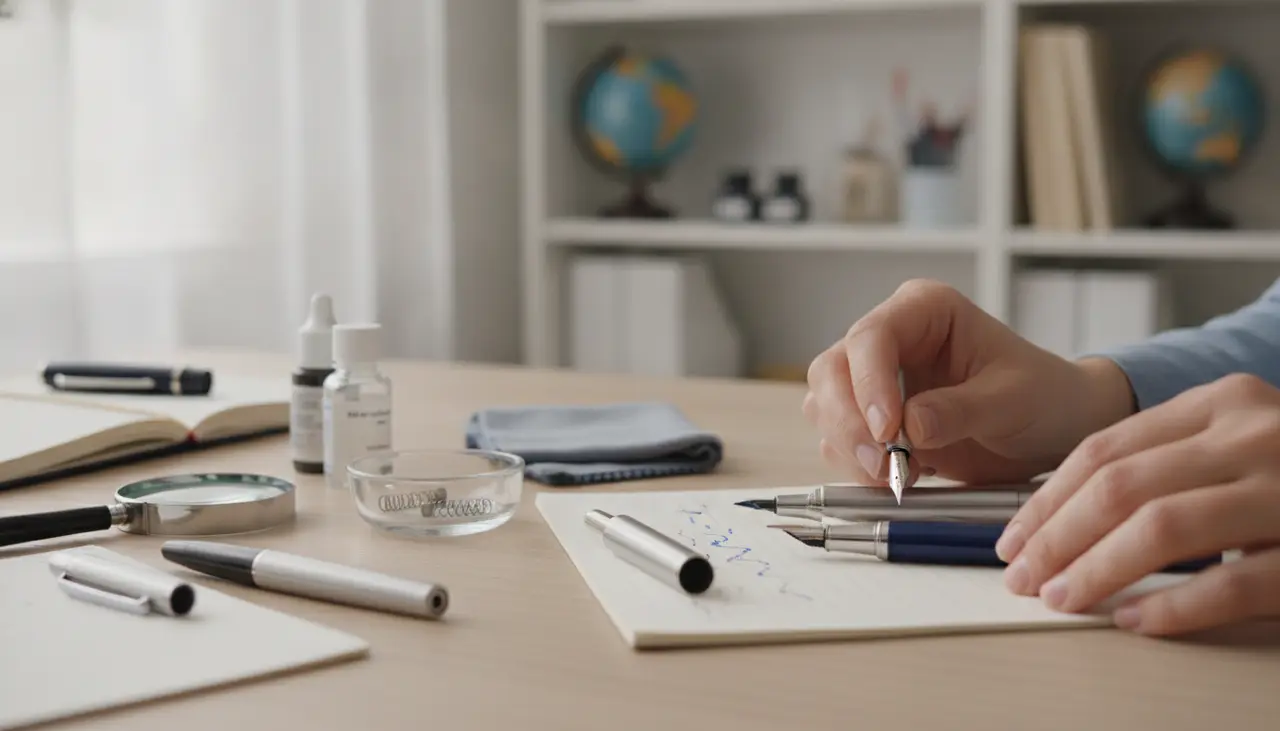
Using Brass Shims Sometimes, a tiny piece of paper fiber gets stuck between the tines of a fountain pen nib. This acts like a dam, stopping the ink. You can find brass shim kits (often sold in pen maintenance sets) that are thinner than a human hair. Gently sliding a 0.002-inch brass shim between the tines can clear out debris without scratching the metal.
Checking Alignment Look at your nib head-on with a magnifying glass. Are the two halves (tines) level? If one is higher than the other, the pen will skip and feel scratchy. You can gently push the high tine down with your fingernail until they are even. Be very patient here—think of it like adjusting a delicate piece of jewelry.
Best Solutions by Pen Type
- For Fountain Pens: A dedicated Pen Cleaning Solution (like those from Goulet Pens or Rohrer & Klingner) works wonders for stubborn, waterproof, or shimmering inks that water alone can't budge.
- For Gel & Rollerballs: Ensure the cap is clicking shut tightly. If the seal is weak, the tip dries out. Sometimes, simply replacing the refill is the most practical path to peace of mind.
- For Heavy-Handed Writers: If you find yourself pressing hard to "force" the ink out, you might be accidentally spreading the tines too far. Try to let the pen's own weight do the work. If you're still looking for that perfect fit, check out The Daily Pen Craft Master Buying Guide: Finding Your Perfect Writing Companion to find a pen that matches your natural grip.
Common Beginner Mistakes to Avoid
- The "Hot Water" Trap: Never use boiling or very hot water to clean a pen. It can warp the plastic feed or damage delicate internal seals.
- The Pressure Play: Pressing harder when a pen skips can permanently bend a fountain pen nib. If it doesn't write with light pressure, something is wrong with the flow, not your strength.
- Mixing Inks: Never mix different brands or types of ink inside the pen. Chemical reactions can create a "sludge" that is a nightmare to clean.
Frequently Asked Questions
Why does my pen skip only when I write fast? This is usually "ink starvation." The feed cannot keep up with the speed at which the nib is pulling ink. Try a "wetter" ink or a pen with a more generous feed system.
Can I use rubbing alcohol to clean my pen? Please, don't! Alcohol can dissolve certain plastics and ruin the finish on many high-quality pens. Stick to water or specialized pen flush.
My pen skips in cold weather. Is that normal? Yes, temperature can affect ink viscosity. If your pen has been in a cold car or bag, let it warm up to room temperature in your hand for a few minutes before writing.
A Final Word of Encouragement
Maintenance is just part of the hobby. Taking the time to clean and tune your pen isn't just about fixing a tool; it's about caring for the companion that helps you express your thoughts. If you've tried these steps and your pen is still being stubborn, don't be afraid to reach out to a professional "nibmeister"—but in nine cases out of ten, a good soak and a little bit of love are all it needs.