
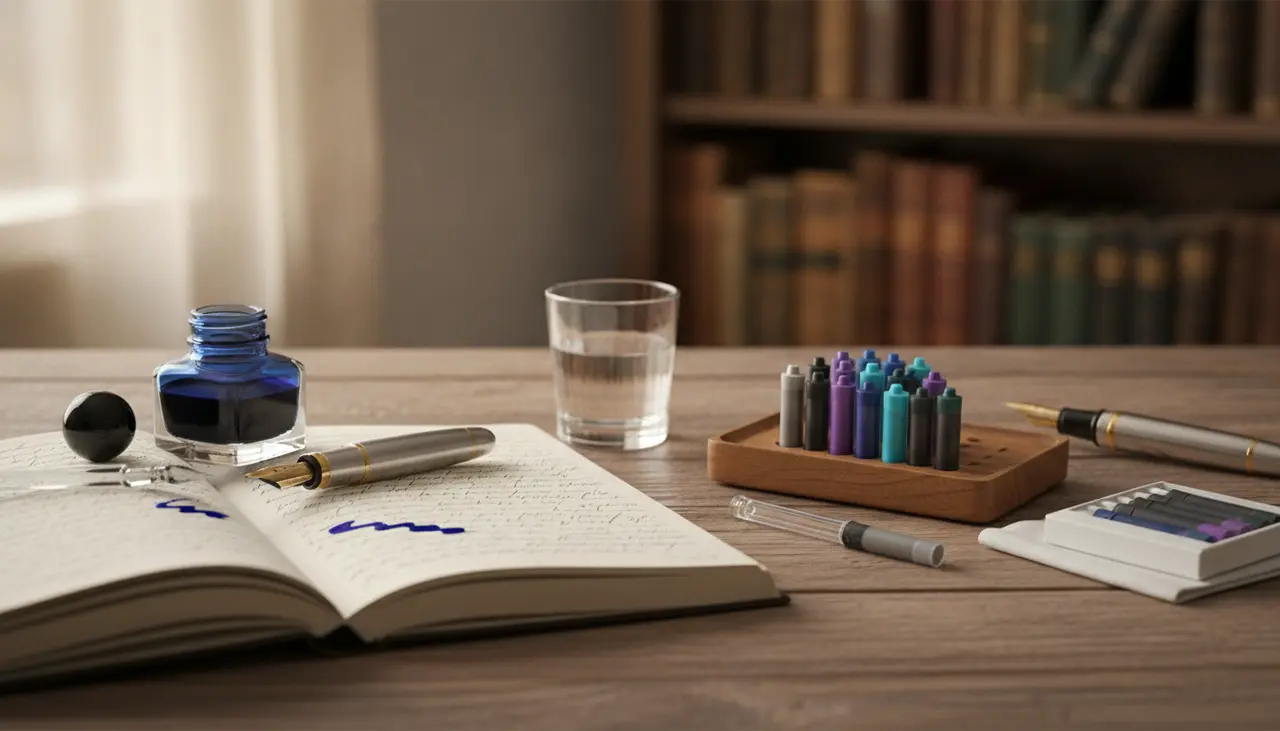
A Beginner’s Guide to Fountain Pen Ink: Cartridge vs. Bottle
Affiliate Disclosure: This post contains affiliate links to some of our favorite ink samples and converters. If you make a purchase through these links, we may earn a small commission at no extra cost to you, which helps us keep the ink flowing here at Daily Pen Craft.
If you’ve just treated yourself to your first fountain pen—perhaps a reliable Pilot Metropolitan or a colorful Lamy Safari—you’re likely standing at a crossroads: Should you stick with the simple ink cartridges that came in the box, or is it time to dive into the beautiful, swirling world of bottled ink?
The short answer for most beginners is this: Choose ink cartridges if you value convenience, portability, and a mess-free experience. Choose bottled ink if you want access to thousands of unique colors, better long-term value, and a more eco-friendly way to write. Many enthusiasts start with cartridges to get the hang of their pen and then transition to bottled ink once they feel more comfortable with basic maintenance.
Who This Guide Is For
This guide is specifically for the new enthusiast who feels a little intimidated by the technical side of fountain pens. If you’re a busy professional, a student, or someone who just wants their daily journaling session to feel a bit more special without a "science experiment" cleanup, you’re in the right place. We’re going to look at how these two ink methods fit into your real, everyday life.
Understanding Your Options: The Quick Comparison
Before we dive into the "why," let’s look at the "what." Here is a quick breakdown of how these two methods stack up against each other.
| Feature | Ink Cartridges | Bottled Ink (with Converter) |
|---|---|---|
| Ease of Use | Extremely High (Plug and Play) | Moderate (Requires Filling) |
| Portability | Excellent (Carry spares in a bag) | Low (Glass bottles are heavy/fragile) |
| Color Variety | Limited to brand-specific basics | Virtually Limitless |
| Cost per ml | Higher | Significantly Lower |
| Eco-Friendliness | Low (Single-use plastic) | High (Recyclable glass/Refillable) |
| Cleanup | Very Little | Requires regular flushing |
The Case for Cartridges: The "Parent-Friend" Favorite for Busy Days
We’ve all been there—you’re in the middle of a meeting or a deep focus session, and your pen runs dry. With a cartridge, you simply unscrew the barrel, pop out the old plastic tube, click in a new one, and you’re back in business in thirty seconds.
Why we love them for beginners:
- No Mess: There is almost zero risk of staining your kitchen table or your favorite rug.
- Travel Ready: They are perfect for throwing in a pencil case or a laptop bag.
- Standardization: Most pens come with one to get you started.
A friendly tip: Just remember that some brands use "proprietary" cartridges. This means a Lamy pen needs a Lamy cartridge, and a Pilot pen needs a Pilot cartridge. If you aren't sure what your pen is, checking out a guide on Fountain Pens vs. Calligraphy Pens: Understanding the Essential Differences for Enthusiasts can help you identify your tool's specific needs.
The Case for Bottled Ink: For the Creative Soul
Once you feel steady with your pen, bottled ink is where the real magic happens. This is where you find "shading" (where the ink looks darker in some parts of a letter than others) and "sheen" (a metallic glisten when the light hits the paper).
To use bottled ink, you’ll usually need a converter—a small, refillable reservoir that fits into your pen just like a cartridge but allows you to "drink" ink directly from a bottle.
Why we love bottled ink:
- The Colors: You aren't stuck with "Office Blue." You can write in Inkebara Caramel or a vibrant turquoise that makes your grocery list look like a work of art.
- The Ritual: There is something incredibly grounding about taking five minutes on a Sunday evening to refill your pens for the week ahead.
- Sustainability: You aren't throwing away a piece of plastic every time you run out of ink.
Which Method Is Best For You?
The Busy Professional or Student If you are taking notes in a fast-paced environment, stick with cartridges. You don’t want to be the person fiddling with an ink bottle in a lecture hall or a boardroom.
The Home Journaler or Artist If your writing happens mostly at a desk, bottled ink is the way to go. You can experiment with ink samples (small 2ml vials) to find your perfect shade without committing to a full $20 bottle.
The Budget-Conscious Writer In the long run, bottled ink wins. While a pack of five cartridges might cost $5, a $15 bottle of ink can last a daily writer a year or more.
Common Beginner Mistakes to Avoid
- Using the Wrong Ink: Never use "India Ink" or "Calligraphy Ink" (the kind meant for dip pens) in your fountain pen. These contain shellac or acrylic which will harden and permanently clog your pen. Always look for "Fountain Pen Friendly" on the label.
- Forgetting to Flush: If you’re switching between different colors of bottled ink, make sure to rinse your pen with room-temperature water until it runs clear.
- Pressing Too Hard: Remember, a fountain pen uses capillary action. You don't need to press down like you do with a ballpoint. Let the ink flow naturally!
Frequently Asked Questions (FAQ)
Can I refill my empty cartridges with bottled ink? Yes! Many "fountain pen parents" use a blunt-tip syringe to clean out an old cartridge and fill it with bottled ink. It’s a great way to get the variety of bottled ink with the convenience of a cartridge.
How do I know if my pen takes a converter? Most modern fountain pens (like the TWSBI Eco or Lamy Safari) either come with a converter or have one available for purchase separately. If your pen is a "piston filler," it actually has the converter built right into the body!
Does the paper matter? It really does, friend. If you use very wet bottled ink on cheap printer paper, it might "feather" (spread out like a spiderweb). For the best experience, try paper from brands like Rhodia or Clairefontaine.
Final Thoughts
Whatever you choose, remember that there is no "wrong" way to enjoy your pen. If cartridges make your life easier right now, embrace them! If you’re ready to get a little ink on your fingers and explore a world of color, grab a converter and a bottle.
Happy writing, and remember to take a moment for yourself today!