
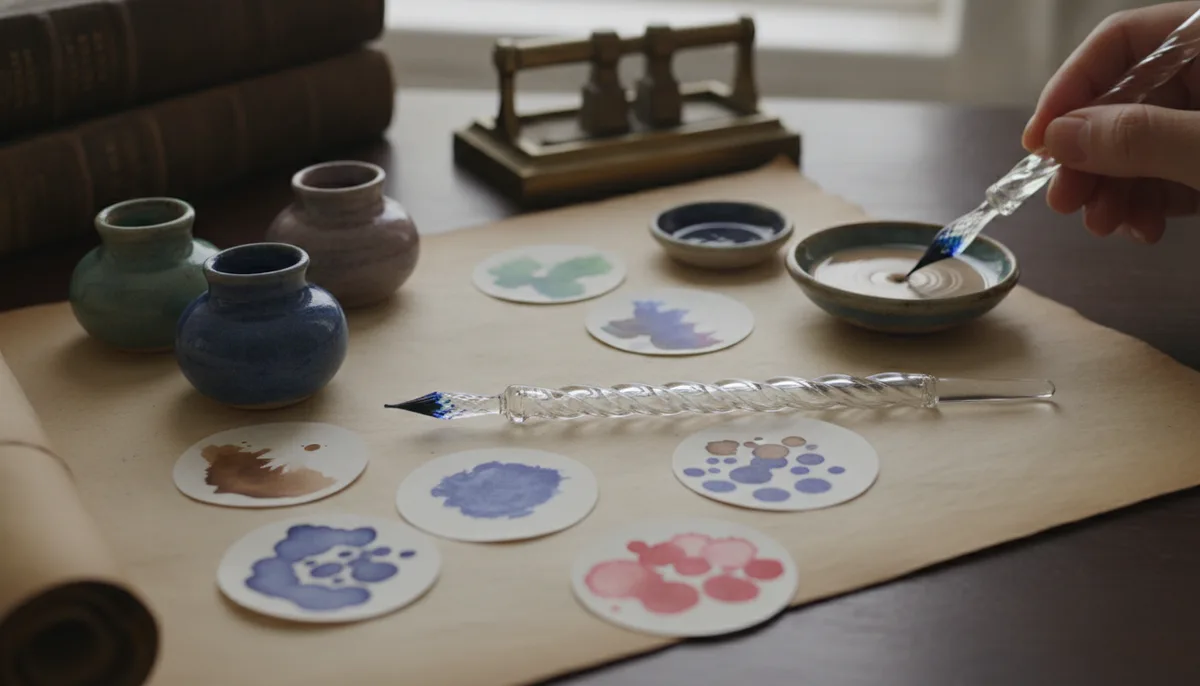
The Timeless Elegance of Glass Dip Pens: A Deep Dive into Ink Testing and Artistry
In the world of fine writing, where precision-engineered fountain pens often dominate the conversation, there exists a tool that prioritizes transparency, simplicity, and raw artistic expression: the glass dip pen. These instruments are more than just aesthetic curiosities; they are functional bridges to the past and indispensable assets for the modern ink collector.
Handcrafted with a tradition that stretches back centuries, glass dip pens offer a tactile connection to the history of correspondence. Whether you are a seasoned calligrapher or a fountain pen enthusiast looking for a more efficient way to sample a growing ink collection, understanding the nuances of the glass pen is essential for elevating your desk experience.
The Renaissance of the Glass Nib: A Brief History
The story of the glass dip pen is inextricably linked to the golden age of French ink making. While the mid-17th century saw the rise of various writing instruments, it was during this era—specifically around 1670—that the house of Herbin began its journey. Originally a sealer wax manufacturer, Herbin eventually transitioned into the world-renowned ink producer we know today.
During this period, glass pens emerged as a sophisticated alternative to the quill. Unlike bird feathers, which required constant "mending" or sharpening with a penknife, a glass pen maintained its shape. Each pen was, and remains, a unique piece of art. Today, Jacques Herbin continues this legacy, producing glass pens in France that retain the artisanal spirit of the 1600s. These pens are not mass-produced in molds; they are hand-blown and twisted by skilled artisans, ensuring that no two pens are exactly alike in their fluting or color depth.
Understanding the Anatomy: Capillary Action and Fluted Nibs
At first glance, a glass pen looks like a solid sculpture. However, its functionality lies in the physics of its nib. A high-quality glass pen, such as those from the Jacques Herbin collection, features a spiral or fluted design.
These grooves are not merely decorative. They utilize capillary action to pull ink upward into the channels of the glass when the pen is dipped into a bottle. When the nib touches paper, gravity and surface tension work together to release the ink at a controlled rate. Because the grooves are deep and spiraled, a single dip can often provide enough ink to write several sentences, or even a full paragraph, far exceeding the capacity of a traditional metal dip nib.
However, because these instruments are handcrafted, the writing experience can vary. The tip is not always ground to a uniform sphere, meaning you might find a "sweet spot" where the pen writes more smoothly. This variability is part of the charm, requiring the writer to engage more deeply with the tool to find its rhythm.
The Ultimate Tool for the Ink Enthusiast
If you have a collection of twenty different ink bottles, the prospect of cleaning a fountain pen twenty times just to see a color sample is daunting. This is where the glass dip pen truly shines. It is the gold standard for ink testing and "swatching."
The greatest advantage is the ease of cleaning. Unlike a fountain pen, which has a complex internal feed and reservoir that requires thorough flushing to avoid cross-contamination of colors, a glass pen is non-porous. To switch from a deep Burgundy to a shimmering Turquoise, you simply:
- Swirl the nib in a glass of water.
- Wipe it clean with a soft cloth.
- Dip into the new color.
This efficiency allows you to experiment with "ink flights" or compare how a specific ink looks on different paper types in a fraction of the time. For those exploring the nuances between different types of writing instruments, it is helpful to understand how these tools compare to other specialized options. You can learn more about these distinctions in our guide on Fountain Pens vs. Calligraphy Pens: Understanding the Essential Differences for Enthusiasts.
Navigating the Nuances: Line Width and Saturation
It is important to manage expectations when transitioning from a fountain pen to a glass dip pen. The writing experience is fundamentally different.
The Wetness Factor
Glass pens tend to write very "wet." Because there is no feed to regulate the flow, the ink sits heavily on the surface of the glass. This often results in a more saturated line than you would get from a standard fountain pen. If you are testing a shading ink, the glass pen may initially mask the shading properties because it lays down so much pigment.
The "End of the Dip" Rule
To get the most accurate representation of how an ink will behave in a fountain pen, pay close attention to the writing as the ink begins to run low on the nib. The last few words before the pen needs to be re-dipped usually reflect the true color and shading of the ink as it would appear coming from a traditional pen feed.
Line Consistency
While a fountain pen nib is designed for a specific width (Extra Fine, Fine, Medium, etc.), a glass pen is more fluid. Depending on the angle of the pen and the pressure applied, you may find the lines are significantly thicker than expected. It requires a light touch; pressing down harder will not necessarily result in more ink, but it could risk damaging the delicate glass tip.
The Critical Role of Paper Selection
Because glass pens deposit a generous amount of ink, the paper you choose is just as important as the pen itself. Standard printer paper or low-quality notebook paper will often succumb to "feathering" (where the ink spreads like a spiderweb) or "bleed-through" (where the ink soaks through to the other side).
To truly appreciate the performance of a glass pen and the beauty of your inks, you need paper with high ink resistance. Brands like Rhodia and Clairefontaine are staples in the community for their smooth, non-porous surfaces that allow the ink to sit on top and dry slowly, preserving the color's vibrancy. For a more tactile, vintage feel, G. Lalo Vergé de France offers a laid finish that interacts beautifully with the wetness of a glass nib.
Choosing the right canvas for your writing is a ritual in itself. For a deeper look at how to pair your writing tools with the perfect surface, see our Finding Your Perfect Match: A Comprehensive Guide to Selecting the Best Journal for Your Writing Ritual.
Mastering the Technique: Tips for Success
Writing with a glass pen is a deliberate act. To avoid the common pitfalls of "blobbing" or inconsistent flow, follow these professional tips:
- The Tap and Roll: After dipping the pen into the ink bottle, do not immediately bring it to the paper. Gently tap the nib against the inside rim of the bottle or roll the pen slightly. This removes the excess "bead" of ink that hangs off the tip, preventing a large blot on your first letter.
- Rotation: As you write, periodically rotate the pen in your fingers. This allows you to use the ink stored in all the different flutes of the nib, extending the time between dips and ensuring an even flow.
- Angle Matters: Most glass pens perform best at a slightly higher angle (around 45 to 60 degrees) than a standard fountain pen. Experiment with the verticality to see how it affects the line width.
- Safety First: Remember that these are instruments of glass. Always place your pen on a pen rest or a soft cloth when not in use. A glass pen rolling off a desk is almost certainly a lost pen.
Maintenance and Care for Your Glass Pen
While they don't require the complex maintenance of a piston-filler fountain pen, glass pens do need basic care to last a lifetime.
- Cleaning: Always clean the nib immediately after use. If ink is allowed to dry inside the flutes, it can be harder to remove and may ghost your next color. Warm water is usually sufficient, but a mild dish soap can be used for stubborn, waterproof, or shimmering inks.
- Storage: Store your glass pen in its original padded box or a dedicated pen wrap. The tips are the most vulnerable part; even a small chip can turn a smooth writer into a scratchy one.
- Restoring the Tip: If the tip does become slightly blunt or scratchy over years of use, some enthusiasts use extremely fine-grit sandpaper (micromesh) to very gently smooth the edges. However, this should only be done with a very light hand and a "less is more" philosophy.
Conclusion: A Tool of Intentionality
The Jacques Herbin glass dip pen is not just a tool; it is an invitation to slow down. In an era of digital speed, the act of dipping a handcrafted glass instrument into a bottle of vibrant ink is a sensory experience that grounds the writer.
Whether you are using it to catalog your ink collection, write a heartfelt thank-you note, or simply enjoy the play of light through the colored glass, these pens offer a unique blend of historical charm and modern utility. They remind us that the process of writing is just as important as the words themselves.
Explore the vibrant colors and timeless designs available, and find the glass pen that speaks to your personal style. Write on!