
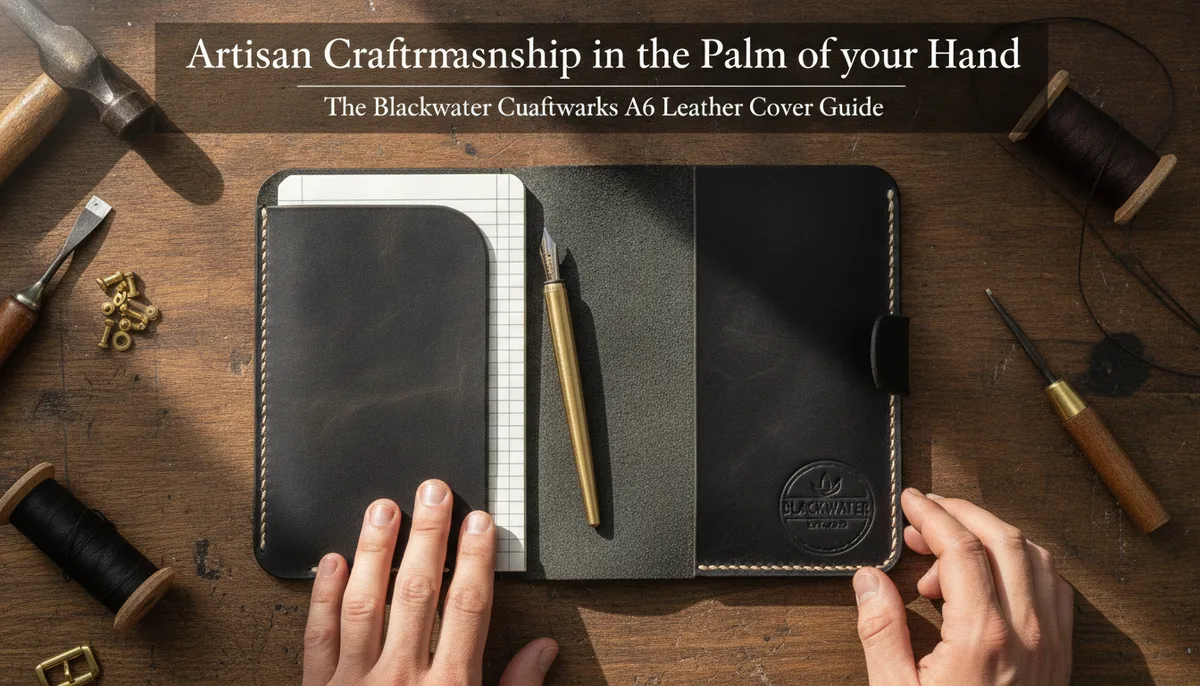
Artisan Craftsmanship in the Palm of Your Hand: The Blackwater Craftworks A6 Leather Cover Guide
In an era increasingly dominated by fleeting digital notifications, the resurgence of the analog notebook is more than just a trend—it is a reclamation of focus. Central to this movement is the artisan leather cover, a tool that transforms a simple paper notebook into a durable, heirloom-quality companion.
Emerging from the rugged, evergreen landscapes of the Pacific Northwest, Blackwater Craftworks has quickly established a reputation for blending traditional techniques with modern aesthetic sensibilities. Since their inception in 2024, they have focused on the tactile experience of writing, culminating in pieces like the Basalt A6 Journal cover. This guide explores the nuances of artisan leathercraft, the strategic advantages of the A6 format, and why a handmade cover is a foundational investment for any stationery enthusiast.
The Pacific Northwest Artisan Tradition
The Pacific Northwest (PNW) has long been a hub for makers who prioritize durability and raw, natural beauty. From bespoke bootmaking to heavy-duty outdoor gear, the region’s "maker culture" is rooted in the necessity of tools that can withstand the elements while maintaining a refined edge.
Blackwater Craftworks carries this torch into the world of stationery. By hand-making their covers, they ensure that no two pieces are exactly alike. Unlike mass-produced "genuine leather" products found in big-box stores—which often consist of bonded leather scraps and heavy plastic coatings—artisan pieces from makers like Blackwater utilize hides that retain their natural character.
The Basalt A6 Journal cover is a prime example of this philosophy. The "Basalt" designation suggests a connection to the volcanic rock common in the PNW, reflected in the cover's strength and the intricate stamping that adorns its exterior. This choice of design isn't just aesthetic; it provides a grip and a sensory experience that smooth leather cannot replicate.
Why the A6 Format is the "Goldilocks" of Stationery
Choosing a notebook size is often a compromise between writing real estate and portability. While A5 is the standard for desk work, it can be cumbersome for those on the move. Conversely, pocket-sized (3.5" x 5.5") notebooks are highly portable but can feel cramped for long-form journaling or complex planning.
The A6 format (105 x 148 mm) sits perfectly in the middle. It offers enough width for comfortable sentence structures and enough height for meaningful lists, yet it fits easily into a jacket pocket, a small messenger bag, or a dedicated EDC (Every Day Carry) pouch.
The Versatility of A6 Inserts
One of the primary reasons enthusiasts gravitate toward covers like the Blackwater Craftworks Basalt is the sheer variety of high-quality A6 inserts available today. Whether you are a dedicated planner or a free-form sketcher, the A6 world has something for you.
When selecting your next insert to pair with a premium cover, consider how your system might evolve. For a look at what's coming in the world of organization, see The 2027 Planner Preview: A Comprehensive Guide to Choosing Your Next Analog System.
The Anatomy of a Premium Leather Cover
When evaluating a handmade leather cover, there are three critical elements to consider: the quality of the hide, the method of construction, and the functional design of the interior.
1. Stamping and Texture
The Basalt A6 features a stamp across the entire exterior. In leatherworking, stamping is a technique used to emboss patterns into the grain. This serves two purposes. First, it masks the minor scuffs that naturally occur with daily use, allowing the cover to age gracefully. Second, it creates a "topographical" feel in the hand, making the act of reaching for your journal a more tactilely rewarding experience.
2. Interior Room and Fit
A common flaw in mass-market covers is a "one size fits none" approach. A high-quality cover must have enough room to accommodate "chunky" notebooks (like a full-year daily planner) without the leather stretching to the point of deformation. Blackwater Craftworks designs their A6 covers with "plenty of room," ensuring that even if you use a notebook with thick paper or add stickers and ephemera to your pages, the cover will still close securely.
3. Hand-Stitching vs. Machine Stitching
While the source notes these are "hand making" their covers, this often implies a level of attention to detail that machines cannot match. Hand-stitched leather typically utilizes a saddle stitch. Unlike a machine lockstitch, which can unravel if a single thread breaks, a saddle stitch remains secure because the two threads independently pass through every hole. This is the hallmark of a cover designed to last decades, not just months.
Pairing Your Cover with the Right Paper and Ink
A leather cover is only as good as the writing experience it protects. For many in the "Pen Addict" community, this means finding the intersection of artisan leather and fountain pen-friendly paper.
If you are using a premium A6 notebook like the Midori MD or the Stalogy 365, you are likely using pens that lay down a significant amount of ink. The choice of ink becomes paramount here. A cover protects the notebook from external damage, but the paper must protect your thoughts from feathering and bleed-through.
When experimenting with different combinations, it is helpful to understand the chemistry of your tools. For those new to the hobby or looking to expand their palette, our A Beginner’s Guide to Fountain Pen Ink: Cartridge vs. Bottle provides essential context on how different ink delivery systems interact with premium paper.
The Philosophy of the "Bespoke" Tool
There is a psychological benefit to using tools that were crafted by a human hand rather than a robotic assembly line. This philosophy is often discussed in the context of high-end pens, but it applies equally to the leather that houses them.
When you hold a Blackwater Craftworks cover, you are holding the result of a maker's specific choices—the tension of the thread, the depth of the stamp, and the selection of the hide. This connection to the maker is what elevates a "product" into a "possession."
We see this same dedication to the "sculptural" aspect of stationery in other fields of the craft. For instance, the way a leatherworker shapes a hide is not unlike how a pen maker shapes a barrel. You can explore this parallel in our profile of another master maker, The Sculptor’s Hand: How Darrell Davis of D Squared Arts Reimagines the Bespoke Pen.
Long-Term Care: Developing the Patina
One of the most rewarding aspects of owning a handmade leather cover is the development of a patina. Over time, the oils from your hands, exposure to sunlight, and the friction of being carried in a bag will change the leather's color and sheen.
To ensure your Blackwater Craftworks cover reaches its full potential, follow these basic maintenance steps:
- Dust Regularly: Use a soft, dry cloth to remove any grit from the stamped crevices.
- Condition Sparingly: Every 6–12 months, use a high-quality leather balm. This keeps the fibers hydrated and prevents cracking in dry climates.
- Embrace the Scars: Small scratches are part of the story. On a stamped cover like the Basalt, these often blend into the pattern, adding to the rugged aesthetic.
Conclusion: An Investment in Your Creative Process
The Blackwater Craftworks Basalt A6 Journal cover is more than just a protective sleeve; it is a testament to the enduring value of handmade goods. By choosing a cover made in the Pacific Northwest by artisans who care about the "inside and out" of their products, you are investing in a tool that encourages you to write more, plan better, and stay present.
Whether you are lucky enough to win one in a giveaway or you choose to support the maker directly, remember that the best analog tools are those that disappear into your workflow while providing a constant, subtle reminder of the beauty of craftsmanship. Pair it with a great notebook, fill it with your favorite ink, and let the journey begin.