Navigating the Endless Pens MAZE: 3D Printing and the Future of Stationery
The world of fine writing instruments is often defined by tradition. We speak of "precious resins," hand-turned ebonite, and nibs crafted with century-old techniques. However, the arrival of the Endless Pens MAZE, a product of a successful Kickstarter campaign, signals a shift in the landscape. As 3D-printing technology matures, it is moving beyond rapid prototyping and into the hands of enthusiasts as a legitimate manufacturing method for high-quality fountain pens.
In the latest discussions within the stationery community, specifically surrounding The Pen Addict podcast, the MAZE has emerged as a focal point for what happens when modern manufacturing meets the tactile needs of writers. But the MAZE is only one piece of the current stationery puzzle. With the upcoming Hobonichi launch and new releases from Blackwing, the "analog" world is more vibrant than ever.
The Innovation of 3D-Printed Writing Instruments
For decades, the manufacturing of fountain pens was limited to a few specific processes: injection molding for mass-market pens, and CNC machining or manual turning for bespoke and high-end models. 3D printing, or additive manufacturing, introduces a third path.
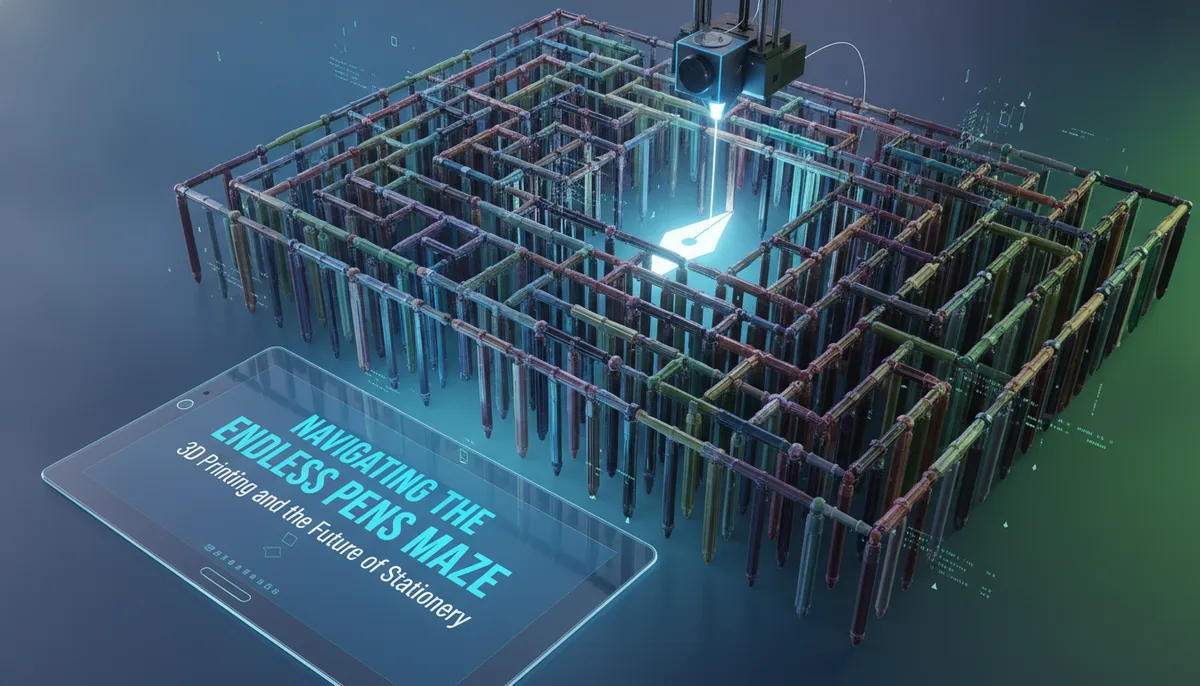
The Endless Pens MAZE utilizes this technology not just for the sake of novelty, but to achieve geometries that would be nearly impossible—or prohibitively expensive—to create on a lathe. The "Maze" name isn't just branding; it refers to the intricate, textured patterns possible through 3D printing. This creates a tactile experience that is fundamentally different from the smooth, polished surface of a traditional resin pen.
When discussing the merits of these modern tools, it is helpful to understand how they differ from specialized instruments. For instance, while a 3D-printed pen might offer a modern aesthetic, the fundamentals of ink delivery remain a constant. You can learn more about these core differences in our guide on Fountain Pens vs. Calligraphy Pens: Understanding the Essential Differences for Enthusiasts.
Navigating the Endless Pens MAZE: A Kickstarter Success
Kickstarter has become the de facto laboratory for the stationery world. It allows brands like Endless Pens to gauge interest in avant-garde designs before committing to massive production runs. The MAZE is the fruit of this crowdfunding labor, and its arrival in the hands of backers has sparked a conversation about the "feel" of 3D-printed materials.
Texture, Weight, and Ergonomics
One of the most immediate observations of the MAZE is its surface. Unlike the cold, slick feel of metal or the "warm" but smooth feel of acrylic, 3D-printed pens often have a micro-texture. Depending on the printing method (such as SLS - Selective Laser Sintering), the pen can feel slightly porous or matte, providing a natural grip that resists the slipperiness often associated with long writing sessions.
The ergonomics of the MAZE are designed to be functional yet provocative. Because 3D printing allows for hollowed-out internal structures that maintain strength, designers can manipulate the balance of the pen with extreme precision. This results in a pen that looks substantial but remains comfortable for extended use.
The Aesthetics of Modernity
Visually, the MAZE stands apart from the "cigar-shaped" classics. It embraces its digital origins. The intricate patterns on the barrel serve a dual purpose: they are a testament to the precision of the printer and a functional grip aid. For collectors who appreciate the intersection of art and utility, the MAZE represents a new category of "industrial bespoke" stationery. This evolution in design mirrors the work of other modern artisans, such as those discussed in our profile on The Sculptor’s Hand: How Darrell Davis of D Squared Arts Reimagines the Bespoke Pen.
The Writing Experience: Can You Just Put Ink in the Thing?
The title of The Pen Addict episode 731 asks a humorous but vital question: "Can you just put ink in the thing?" For many newcomers to the hobby, or even veterans looking at a 3D-printed "maze" of a pen, there is a lingering fear that complexity might hinder utility.
The answer, fortunately, is yes. Beneath the high-tech exterior, the Endless Pens MAZE relies on proven nib technology. Most 3D-printed pens use standard housing units (like those from JoWo or Bock), ensuring that the writing experience is consistent and reliable. The MAZE isn't a "display piece"; it is a workhorse designed for daily carry.
The flow of ink through a modern feed into a well-tuned nib provides that classic fountain pen "glide" that enthusiasts crave. The contrast between the futuristic body and the traditional liquid ink creates a unique cognitive dissonance that makes the MAZE a joy to use.
Fountain Pen Ink Samples
The Stationery Season: Hobonichi 2026 and Blackwing Innovations
While the MAZE represents the future of hardware, the software of the stationery world—paper and planners—is entering its most frantic season. The Hobonichi 2026 launch is a "holiday" in the stationery community.
The Hobonichi Phenomenon
Hobonichi planners, known for their use of ultra-thin, fountain-pen-friendly Tomoe River paper, have a cult-like following. The annual launch isn't just about the planners themselves, but the dozens of artist-designed covers and accessories that accompany them. Whether you use a Techo, a Cousin, or a Weeks, the ritual of selecting your "setup" for the coming year is a significant event.
Choosing the right planner is a personal journey that involves balancing portability with writing space. For those looking to dive deeper into how to pick the right substrate for their pens, see our Comprehensive Guide to Selecting the Best Journal for Your Writing Ritual.
Blackwing’s Latest Release
Not to be outdone by the fountain pen world, Blackwing continues to innovate within the graphite space. Their latest releases often pay homage to cultural icons or historical events, but the core appeal remains the same: the replaceable eraser and the high-quality Japanese graphite. For the MAZE user who wants a pencil that matches the "cool factor" of their 3D-printed pen, a limited-edition Blackwing is the natural companion.
Curating Your Analog Defaults
A recurring theme among stationery experts like Brad Dowdy is the concept of "Analog Defaults." This is the practice of identifying the specific tools that you reach for without thinking.
Your Analog Defaults might include:
- The Daily Driver: A pen like the Endless Pens MAZE that is reliable and comfortable.
- The Pocket Notebook: A quick-access spot for fleeting thoughts.
- The Long-Form Journal: A Hobonichi or similar high-quality notebook for reflection.
- The Pencil: A Blackwing for sketching or erasable notes.
By narrowing down your tools to a set of defaults, you reduce the "decision fatigue" that can sometimes come with having a large collection. The goal is to get to the writing faster. The MAZE, with its unique texture and reliable nib, is a strong candidate for a primary default pen—especially for those who want their tools to be a conversation starter.
Conclusion: The Path Forward for Pen Enthusiasts
The arrival of the Endless Pens MAZE from its Kickstarter journey is more than just a product launch; it is a proof of concept. It proves that the community is ready for new materials and new methods of creation. As we look toward the 2026 Hobonichi launch and beyond, it is clear that the analog world is not stagnating. It is evolving, adopting new technologies to enhance the age-old practice of putting pen to paper.
Whether you are navigating the intricate patterns of a 3D-printed barrel or the blank pages of a new planner, the objective remains the same: finding the tools that inspire you to create. The MAZE is a reminder that even in a digital age, there is plenty of room for innovation in the palm of your hand.